

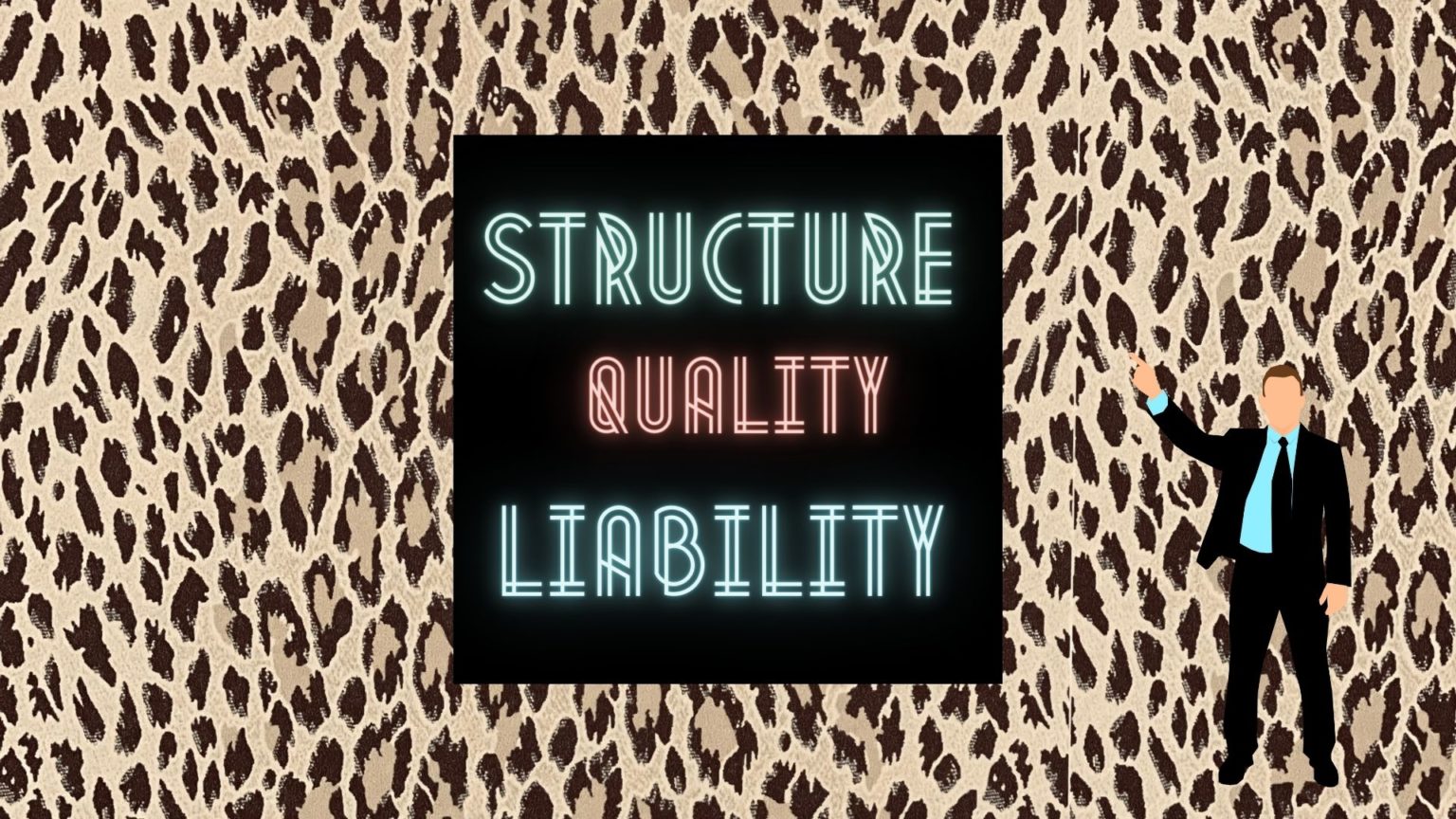
As I write this post, I’m in my tenth—and final—week, and I can’t believe how fast time has flown by! It feels like it was only a few days ago that I sat down and wrote my first blog post here about abbreviations. In a previous blog post, you could read an interview with me where I talked about my experience at SQL Systems. In this post, I’ll go through SQL Systems’ three pillars: Structure, Quality, and Liability. What these words mean to me and how SQL Systems works with them!
Structure
I don't think I've ever really given that word much thought. When I joined SQL Systems, I knew the "S" stood for "structure," but I figured they'd just picked a few words that sounded right.
But when I think about the opposite of structure—which I’d say is chaos—I know that’s something you want to avoid! Because when things are chaotic, your mind will be too. In my daily life, I constantly try to make everyday tasks easier; for example, when I check my email, I make sure to reply to all emails right after I open them. That way, I don’t have to keep checking my inbox all day to see if I’ve left anything unanswered.
By following procedures and perhaps even using checklists, I make sure tasks are completed. It may sound like a small thing, but overall, it makes a huge difference.
I remember my mom always nagging me about how important it was to be organized when it came to everyday tasks, and I was so tired of listening to her. It probably wasn’t until I had children of my own that I truly realized how much being organized makes things easier—and that you actually have to be organized for life to run smoothly.
After 10 weeks at SQL Systems, I’ve come to realize that the same principle applies when it comes to data. If your data isn’t structured, chaos will inevitably ensue, and you’ll end up wasting time and resources.
If you work in an unstructured way at a company, you’ll constantly have to put out fires. I believe that a good structure is the key to creating the kind of company and workday we want.
Quality
You may remember that I wrote a previous blog post about quality? If you missed it or just want to read it again, you can find it here.
In my previous post about quality, I mentioned, among other things, that I believe it’s up to the user to decide what constitutes quality; we all have different expectations and we all experience things differently.
However, quality is usually associated with a well-known brand and often a higher price.
Personally, I agree with that; I’m happy to spend more money on something that will last longer. Or at least something I think will last longer.
After all, there have been times when I’ve been proven wrong and thought things would be of higher quality than they actually turned out to be. In some cases, I’ve been pleasantly surprised to find that things held up better than expected.
When it comes to quality, there are obviously differences. For some gadgets and clothing, it may not matter much if they don’t meet the expected quality standards—other than from a sustainability perspective. Whereas, for example, it is vital that car seats or cars meet the quality standards they promise.
When we talk about data quality assurance—which is what SQL Systems does—I have to admit, somewhat embarrassingly, that I didn’t even know this was possible. But when it comes to data quality, this is a metric based on factors such as accuracy, completeness, consistency, and reliability. By measuring data quality, you can identify data errors that need to be resolved and assess whether the data in a system is suitable. So I would definitely classify data as something that needs to be quality-assured! Because if you don’t keep track of this, it can lead to devastating extra costs.
Reliability / Liability
This word is a little trickier, because how do you really know if something is reliable?
I would say that this is somewhat similar to the concept of quality. It is the user who determines what reliability means, and that determination is based on one or more experiences.
If I order something from a company and it says delivery takes 2–3 days, but it actually takes 1.5 weeks instead. If this happens over and over again, I will no longer consider their stated delivery time to be reliable.
On the other hand, if I order from a company and the goods are delivered smoothly without any delays, and it turns out that the goods are of excellent quality—or exactly what I expected—then I will likely consider this company to be very reliable for placing orders with.
For something to be considered reliable, I would say that certain factors must be in place first. Now I understand that this is where the "S" for "structure" and the "Q" for "quality" come into play!
Over the course of these 10 weeks, I’ve had the opportunity to work at a truly wonderful company that cares deeply about its employees, and I’ve met both amazing people and animals! I’ve also come to understand the true meaning of structure, quality, and liability—that at SQL Systems, they don’t just organize and ensure the quality of data, but also operate in a structured manner. Here, you find high quality and truly feel a sense of reliability!
I am incredibly grateful for my time here, as I have learned so much on so many different levels. It’s when all these elements come together and deliver on their promise that the gears can finally start turning—and that’s exactly what’s happening here at SQL Systems!
Are you curious about how we can help your business get up and running? Email us at nyfiken@sqlsystems.se. Feel free to follow us on LinkedIn and Facebook to stay up to date! We’re now on Instagram too!